




35+
Years Legacy
First Impressions Redefined:
Enhancing AngelOne's Onboarding Portal
My Role
Lead UX Designer
Team
Cross-functional collaboration
with UI Designer and AngelOne's Product & Development teams
Timeline:
August 2023 – September 2023
Overview
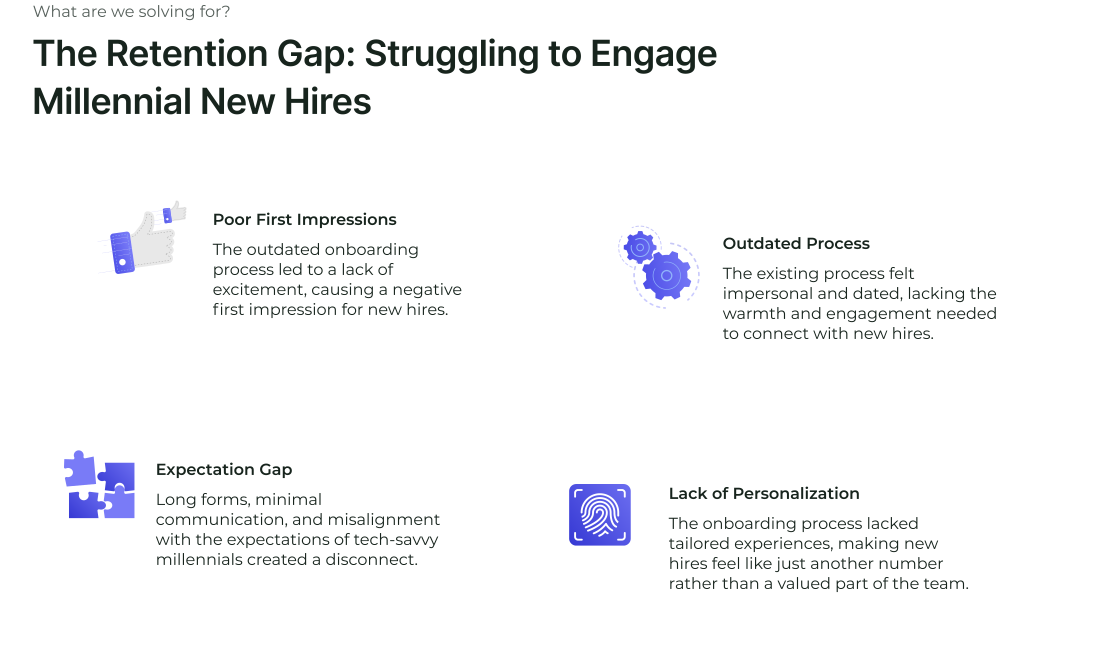
AngelOne's onboarding portal was redesigned to reduce high drop-off rates and deliver a seamless, millennial-friendly experience.
The aim was to create an engaging, youthful interface that resonated with younger audiences while adhering to the constraints of low-code technology. This redesign enhanced first impressions and fostered stronger connections with new hires.
User Research
Understanding Millennial Expectations

To create a solution that met the needs of tech-savvy, career-oriented millennials, I conducted thorough research:
Secondary Research:
Reviewed industry insights from SHRM, HBR, TechCrunch, Forbes, and Gallup.
Explored millennial workplace trends, onboarding practices, and factors influencing retention.
User Interviews:
Semi-structured interviews with 10 recent hires were conducted, selected through purposive sampling across various departments, to understand their emotions, frustrations, and expectations during onboarding.
Research Findings and User Mental Models
Analysis revealed a significant misalignment between users' mental models of modern digital experiences and the existing system:
Core Motivations and Values
Professional Alignment
•
Work-life balance
•
Role alignment with career goals
•
Growth and development opportunities
•
Cultural integration and fit
Decision Influencers
•
Company reputation and market visibility
•
Social proof via employee testimonials
•
Comprehensive benefits structure
•
Workplace flexibility options
Information Priorities
•
Clarity on team dynamics and roles
•
Day-one expectations
•
Career progression pathways
•
Cultural immersion opportunities
Behavioral Patterns and Pain Points
COGNITIVE EXPERIENCE
•
Preferred guided, step-by-step processes
•
Abandoned complex, lengthy forms
•
Felt drained switching between
multiple systems
SYSTEM INTERACTION ISSUES
•
Struggled with non-intuitive navigation
•
Frustrated by repeated data entry
•
Confused by poor error feedback,
impacting task flow
EMOTIONAL BARRIERS
•
Generic content and outdated visuals
lowered engagement
•
Lack of customisation felt impersonal
•
Limited feedback created uncertainty
•
Absence of social validation weakened motivation
Strategic Intent Framework
Based on our research findings, I developed a comprehensive design strategy organized around four key pillars that aligned with both user needs and business objectives.
01
Trust Building
Build confidence and reduce uncertainty through clear communication and guidance
Potential Business Impact
Boosts employee retention, reduces drop-offs, and enhances long-term commitment.
02
Personalization
Create a welcoming, personalized experience to make new hires feel recognized and valued.
Potential Business Impact
Enhances first impressions and user engagement, which leads to better retention rates.
03
Cultural Integration
Foster early connections and a strong sense of community to enhance employee engagement from day one.
Potential Business Impact
Promotes cultural alignment and engagement, fostering a cohesive work environment.
04
Proactive Support
Maintain user engagement while reducing friction and cognitive load
Potential Business Impact
Enhances user satisfaction, minimizes onboarding delays, and ensures a smoother transition into roles.
Low Code Limitations
These constraints led to a design focused on clarity and simplicity, ensuring an effective onboarding experience.
Module 1
The Homepage
The first touchpoint designed to inform, reassure, and inspire
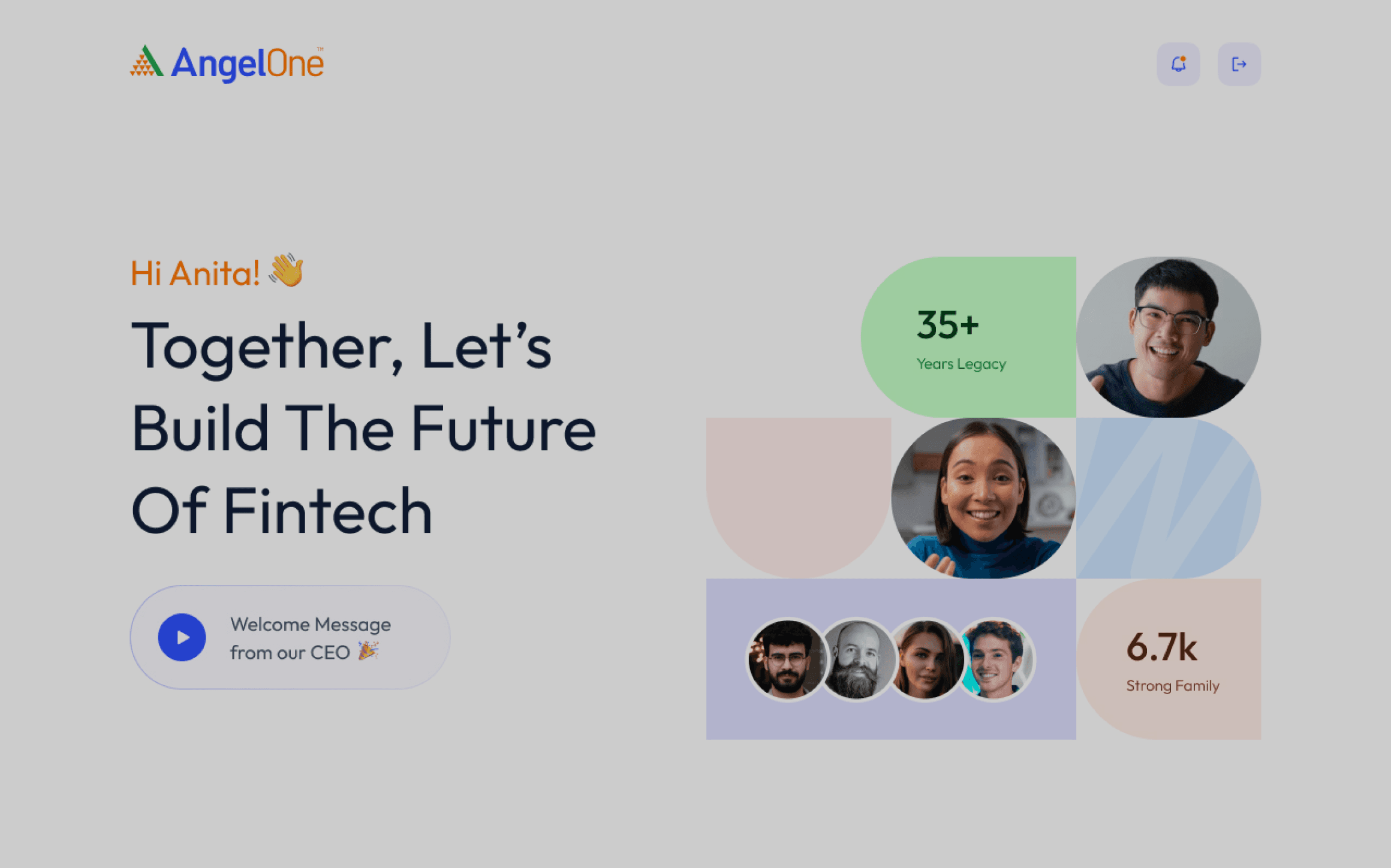
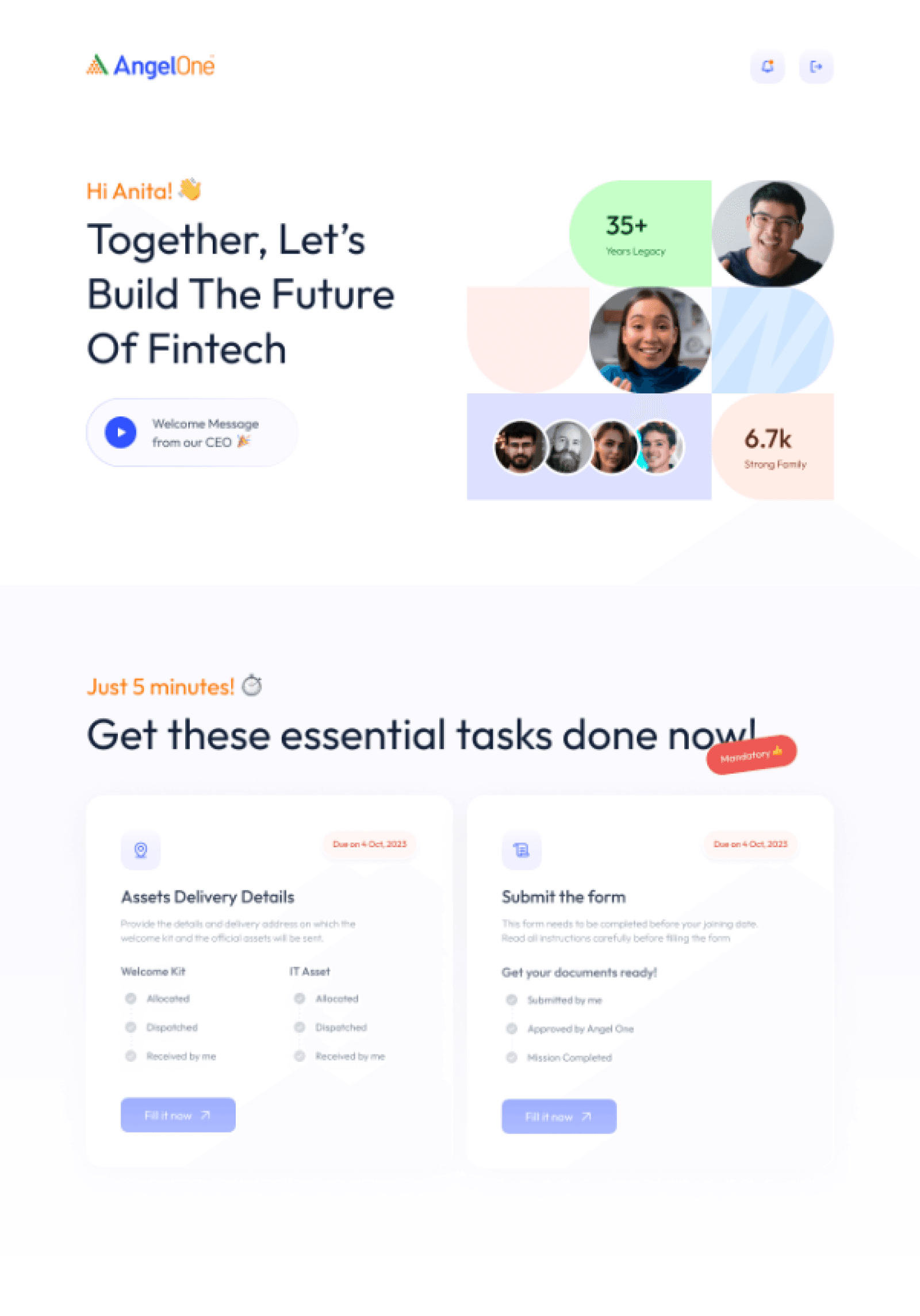
Designed for Dual Mindsets
Addressed the needs of both decisive and hesitant millennial users by:
Offering a structured, action-first experience for confident users.
Providing reassurance and accessible support for users needing guidance.
Narrative-Driven
Built the homepage as a step-by-step story to:
Reduce cognitive load by revealing information progressively.
Create an emotionally engaging journey rather than a static interface.
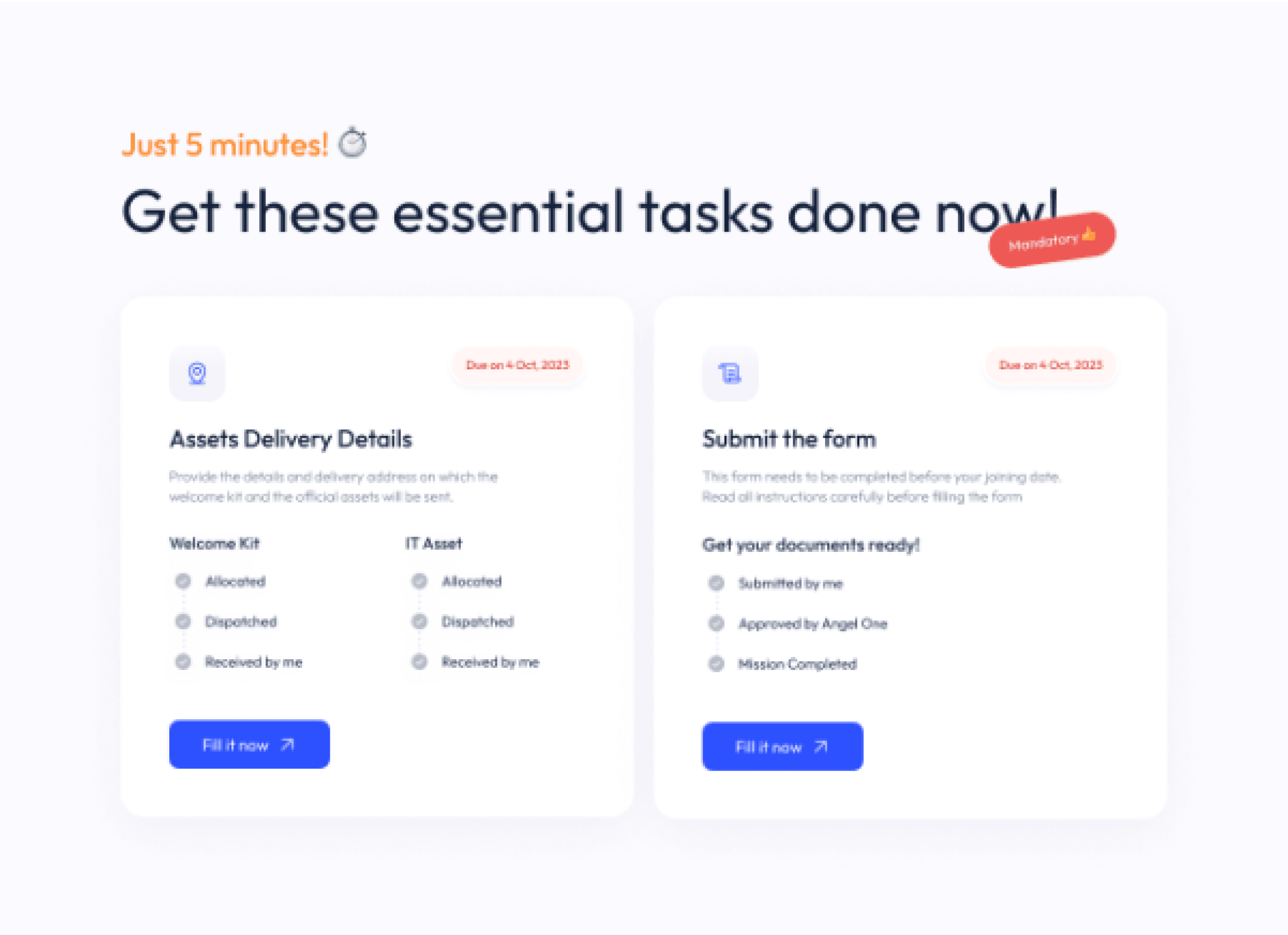
Easing Users into the Journey with Smart Framing
Clarity and Motivation through Microinteractions
Kept users informed and motivated by:
Using a clear visual hierarchy to outline essential tasks.
Integrating microinteractions and feedback nudges to acknowledge progress.
Strategic Intent:
Reduce cognitive load while boosting motivation with visible progress cues.
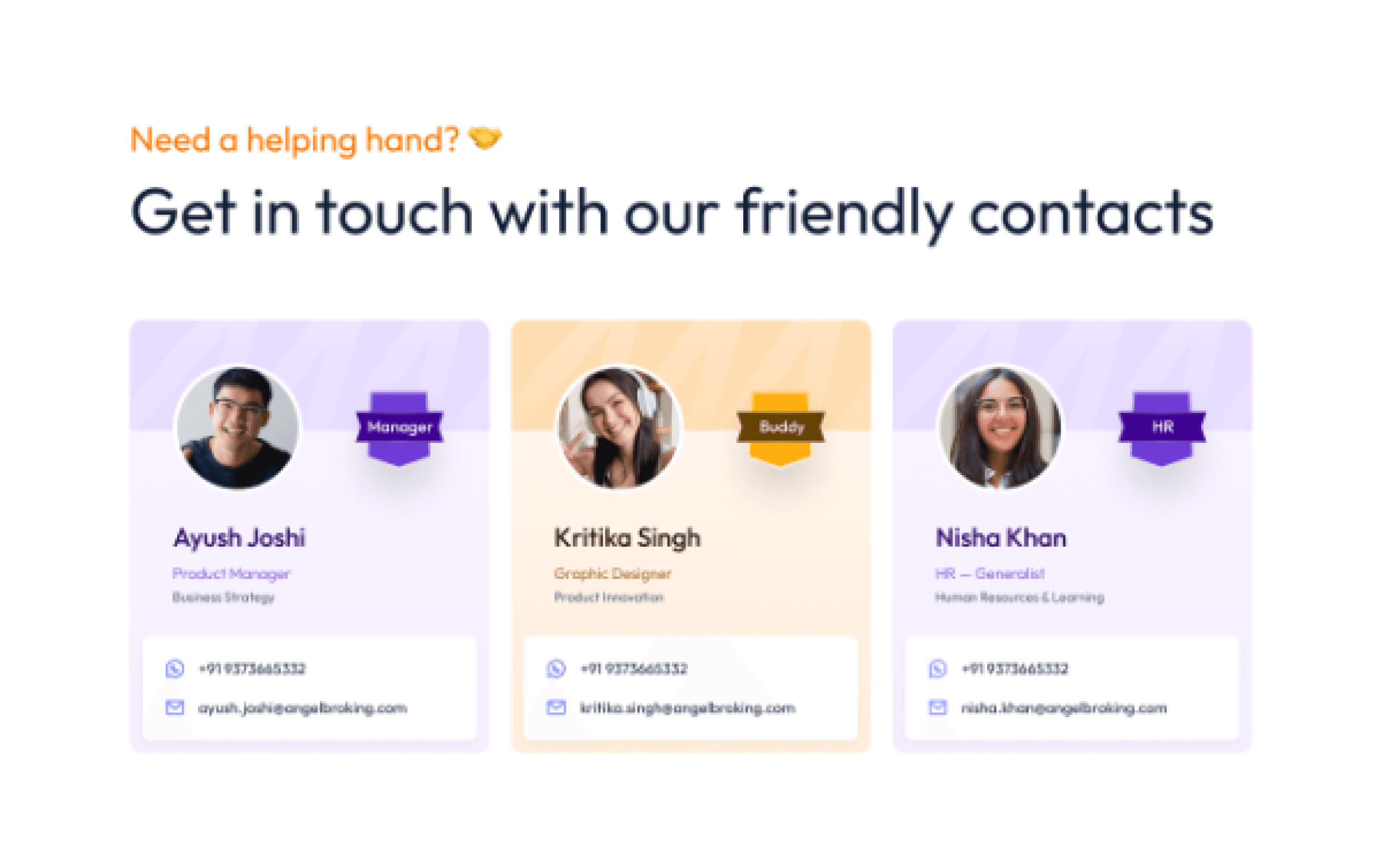
Proactive, Human-Centered Support
Helped reduce user anxiety by:
Offering a structured, action-first experience for confident users.
Ensuring help felt personal, immediate, and approachable.
Strategic Intent:
Offer psychological safety and reduce hesitation by making help feel approachable.
Authenticity as a Hiring Strategy
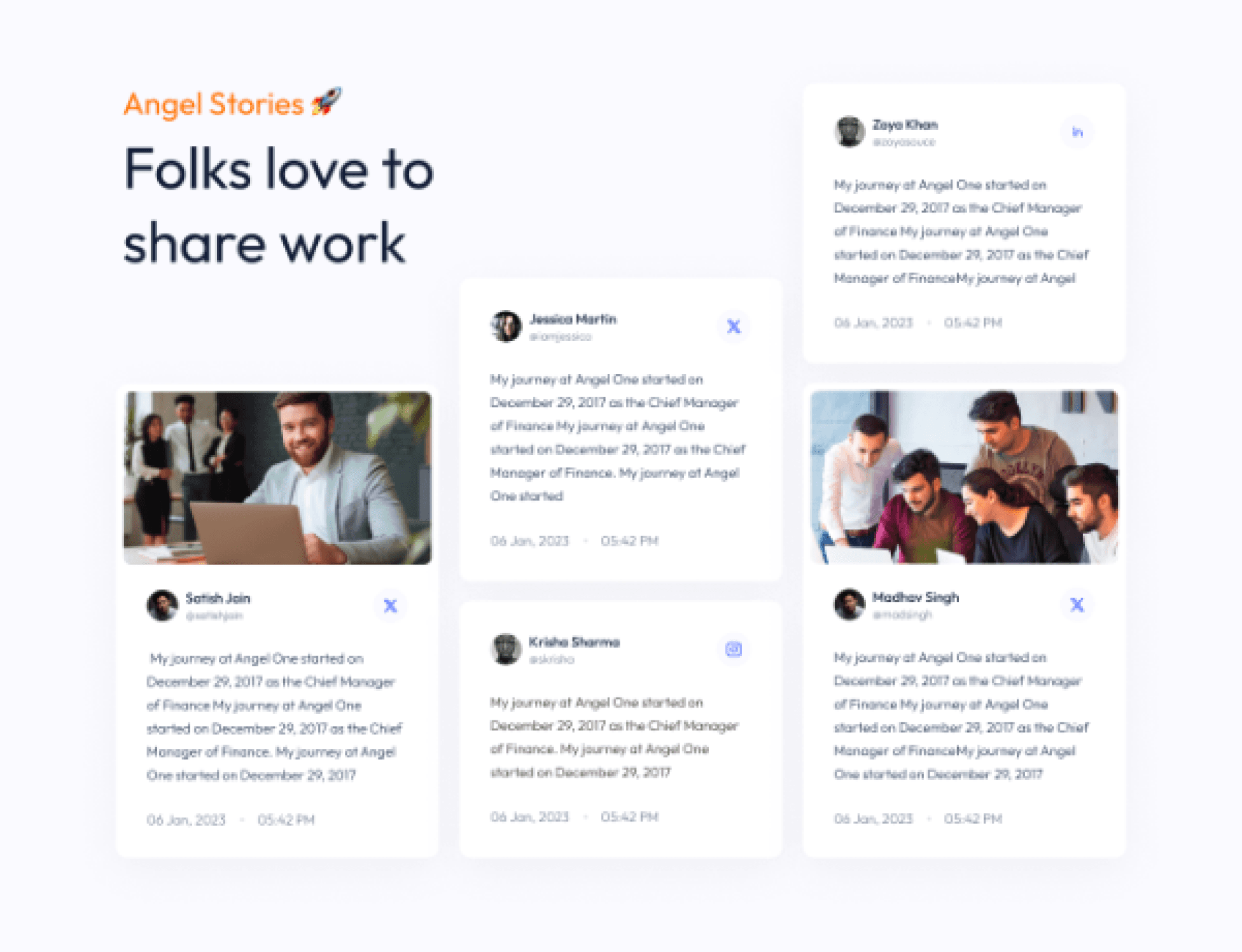
Authentic Social Proof with Testimonials
Included employee testimonials to:
Provide relatable, human insight into life at the company.
Set realistic expectations while inspiring new hires through real stories.
Strategic Intent:
Used social validation to ease uncertainty and boost confidence.
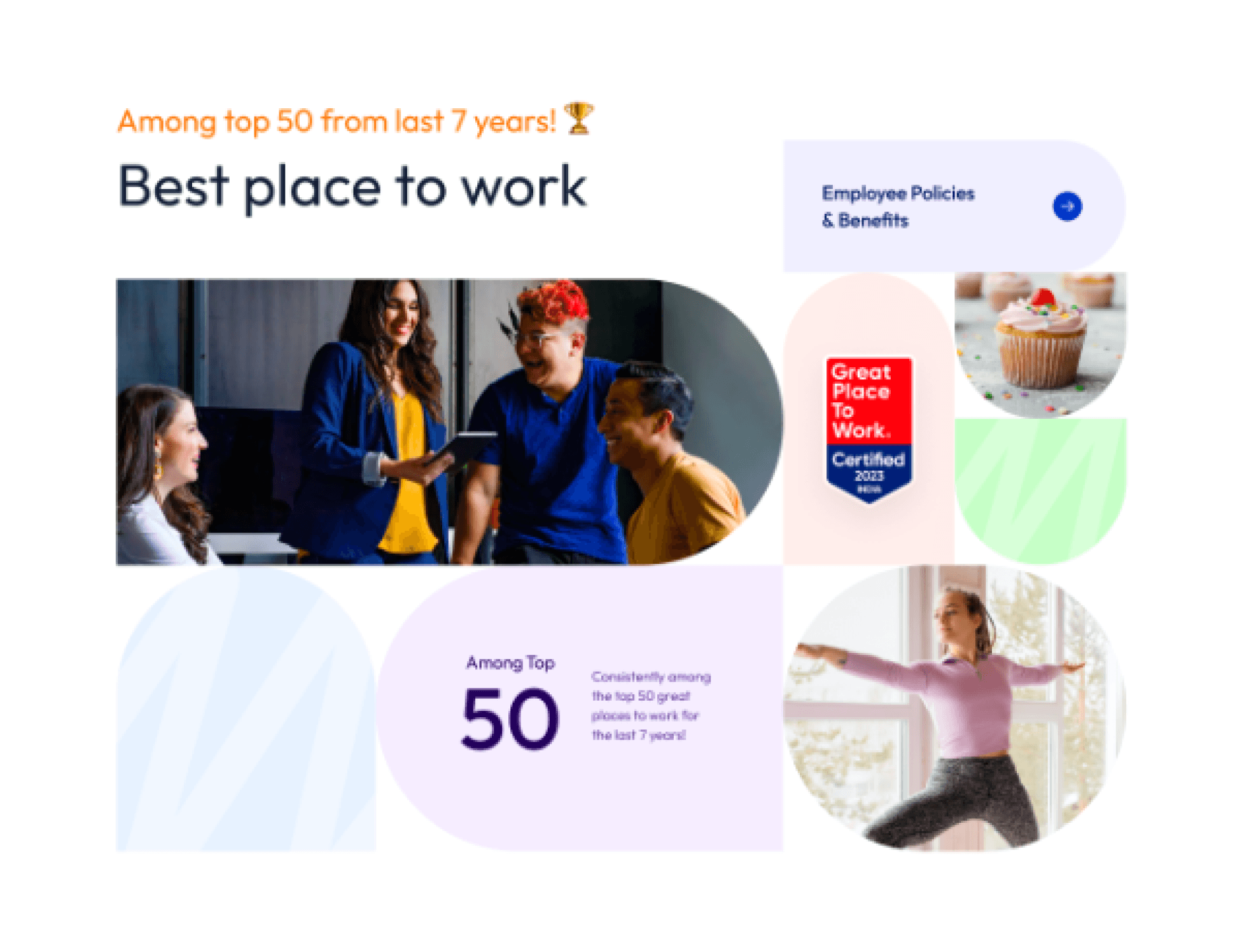
Reinforcement via Rankings and Perks
Highlighted employer rankings and perks to:
Reinforce job security, stability, and a positive work environment.
Reduce hesitation with transparent information about what to expect.
Strategic Intent:
Leveraged credibility and clarity to build trust and reduce ambiguity.
Before
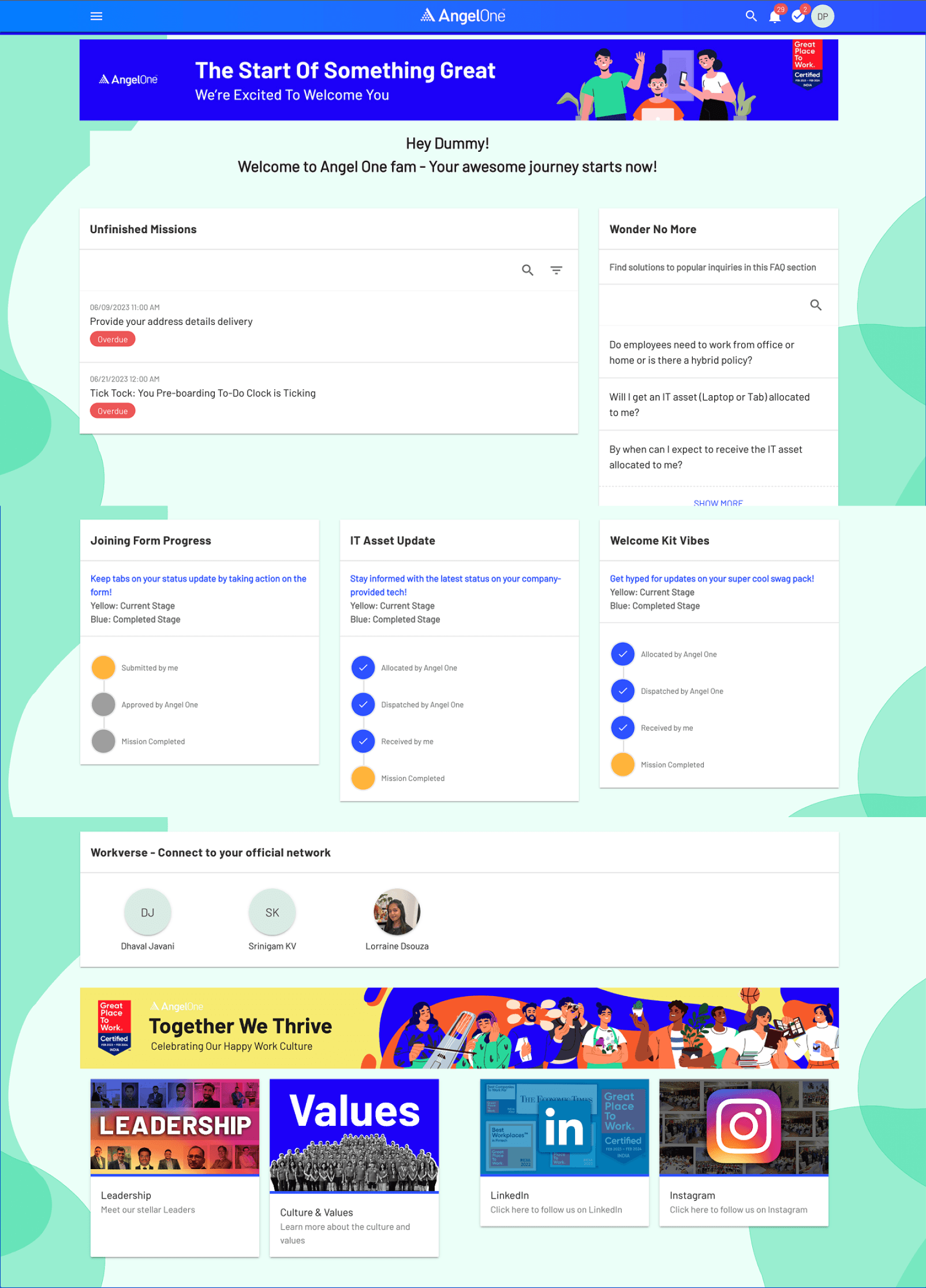
After
Module 2
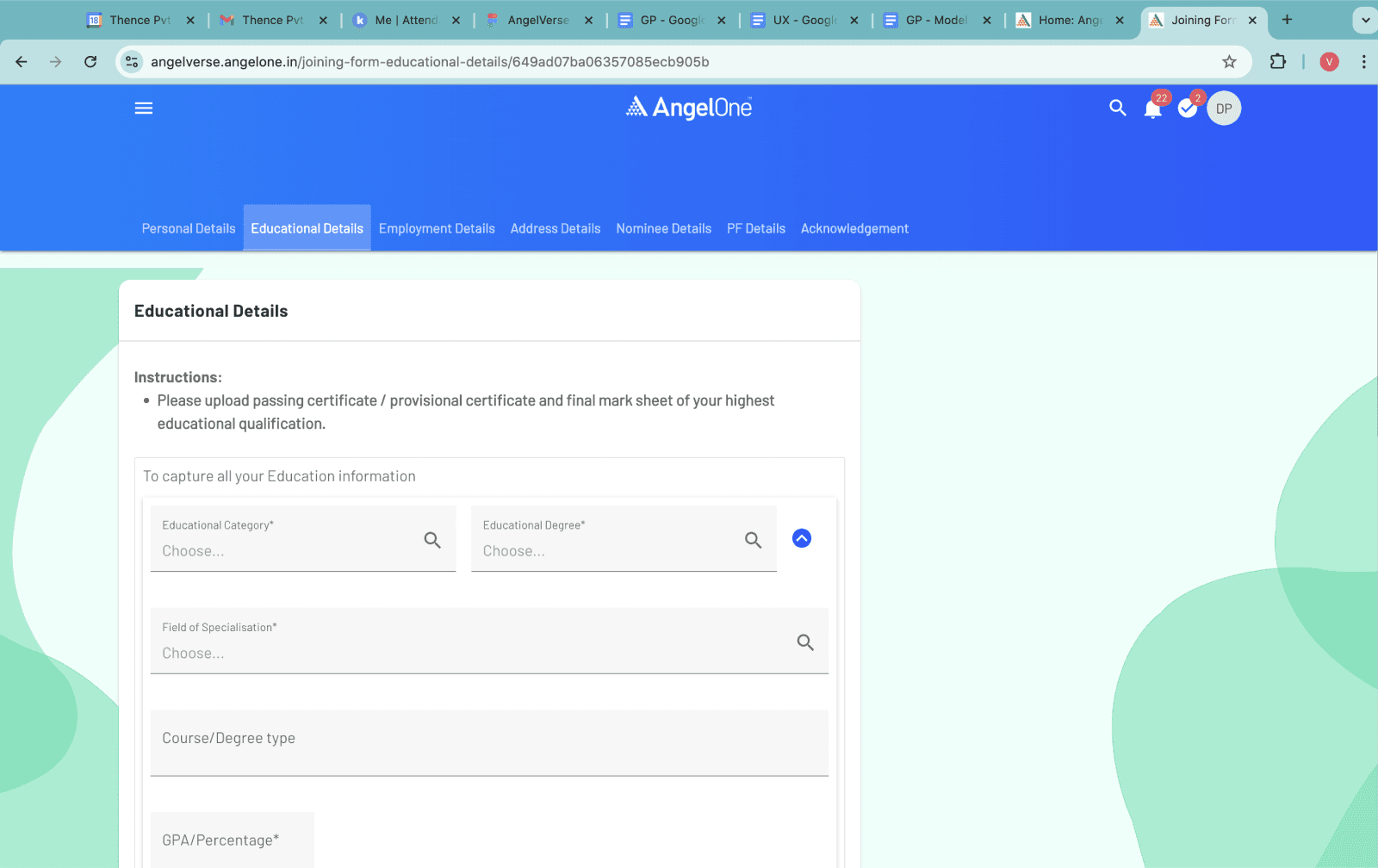
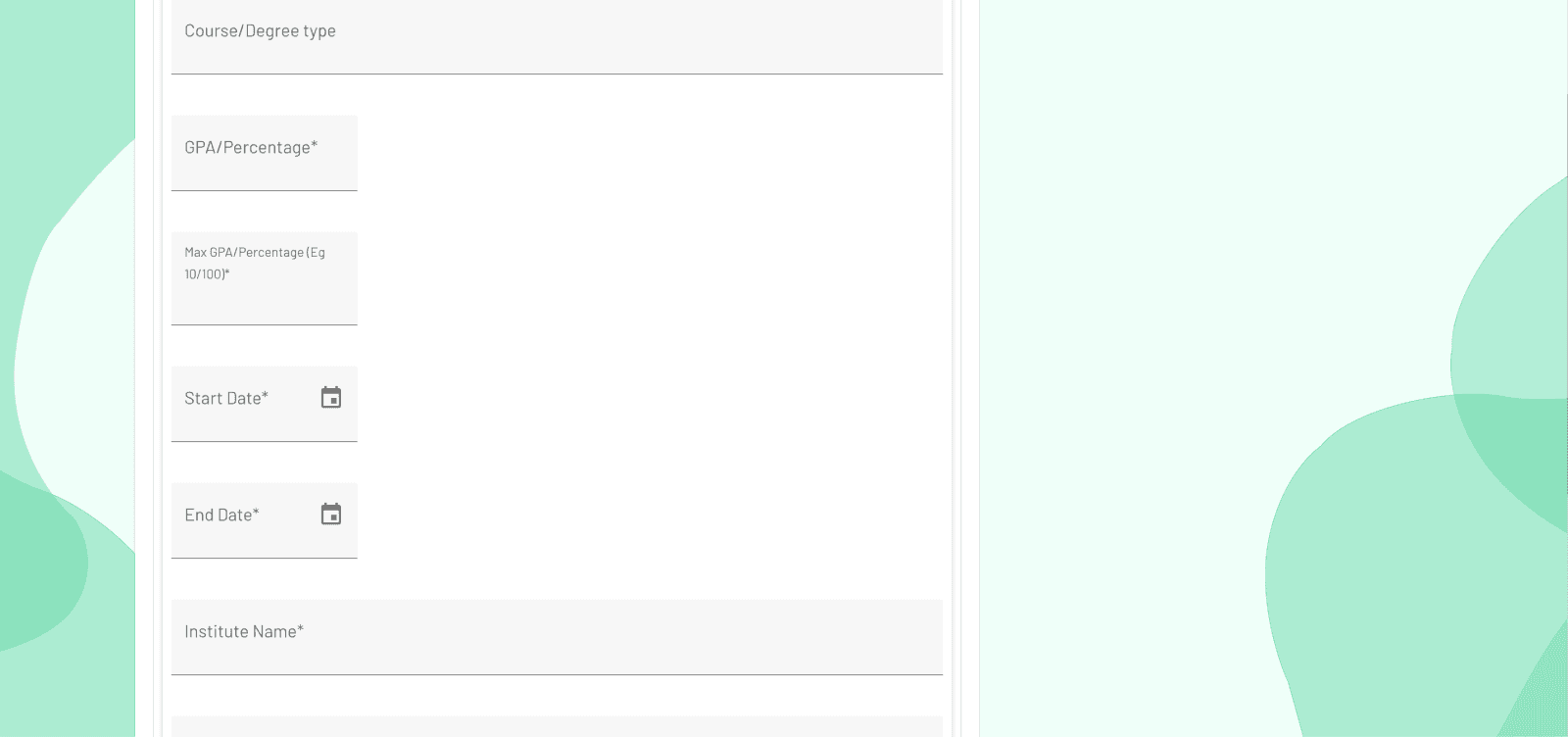
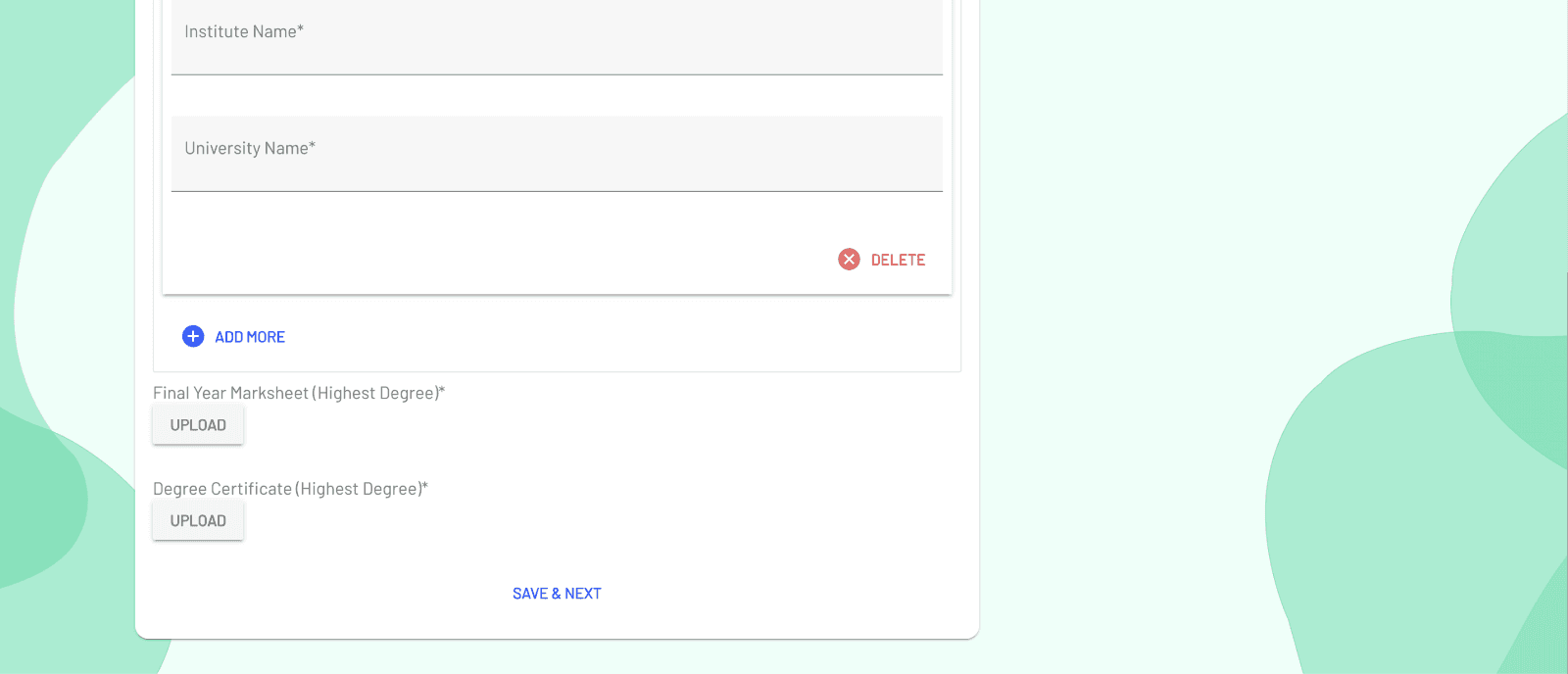
Streamlined Onboarding with Guided Forms
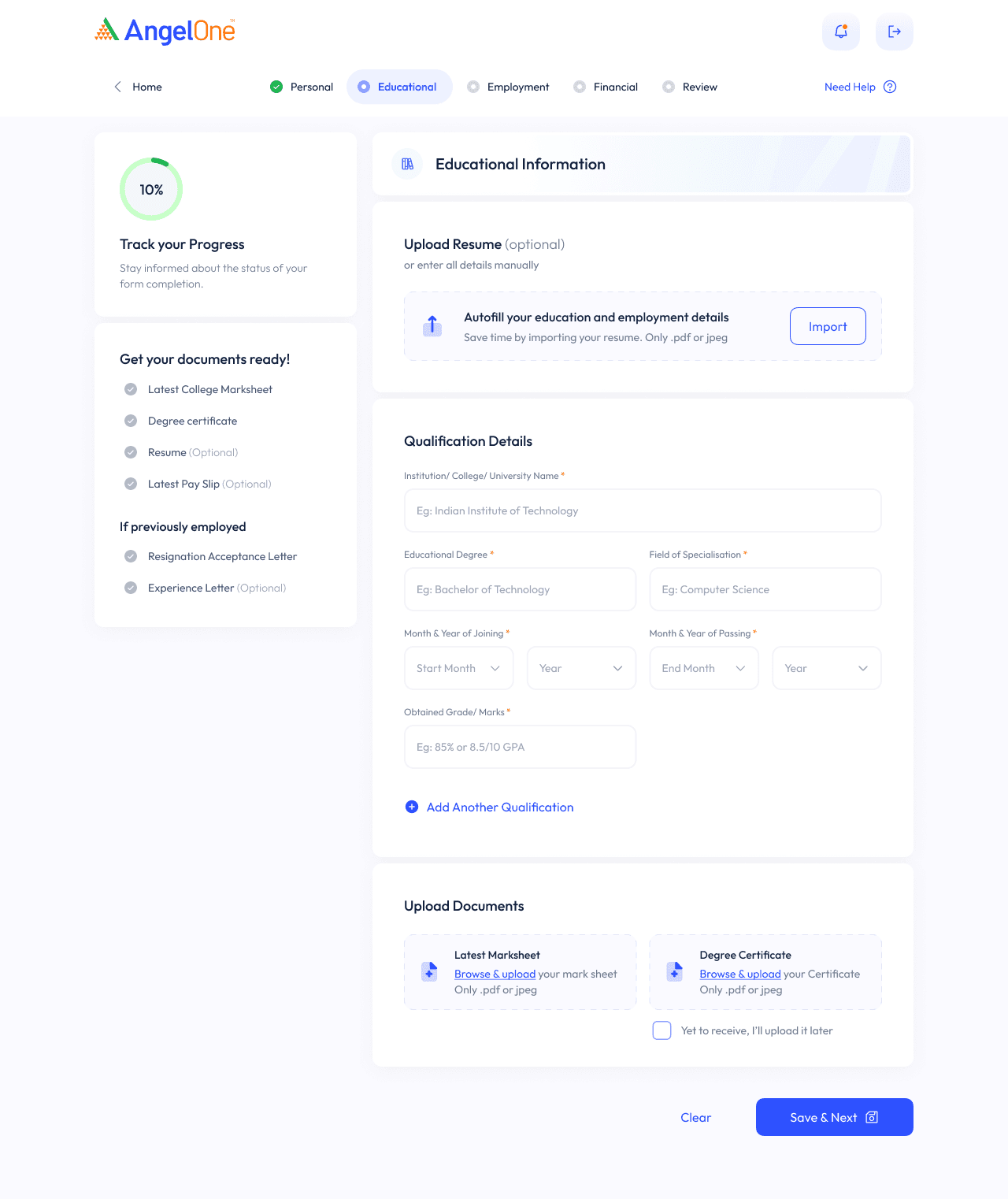
Designed an onboarding flow tailored for tech-savvy, career-focused users to:
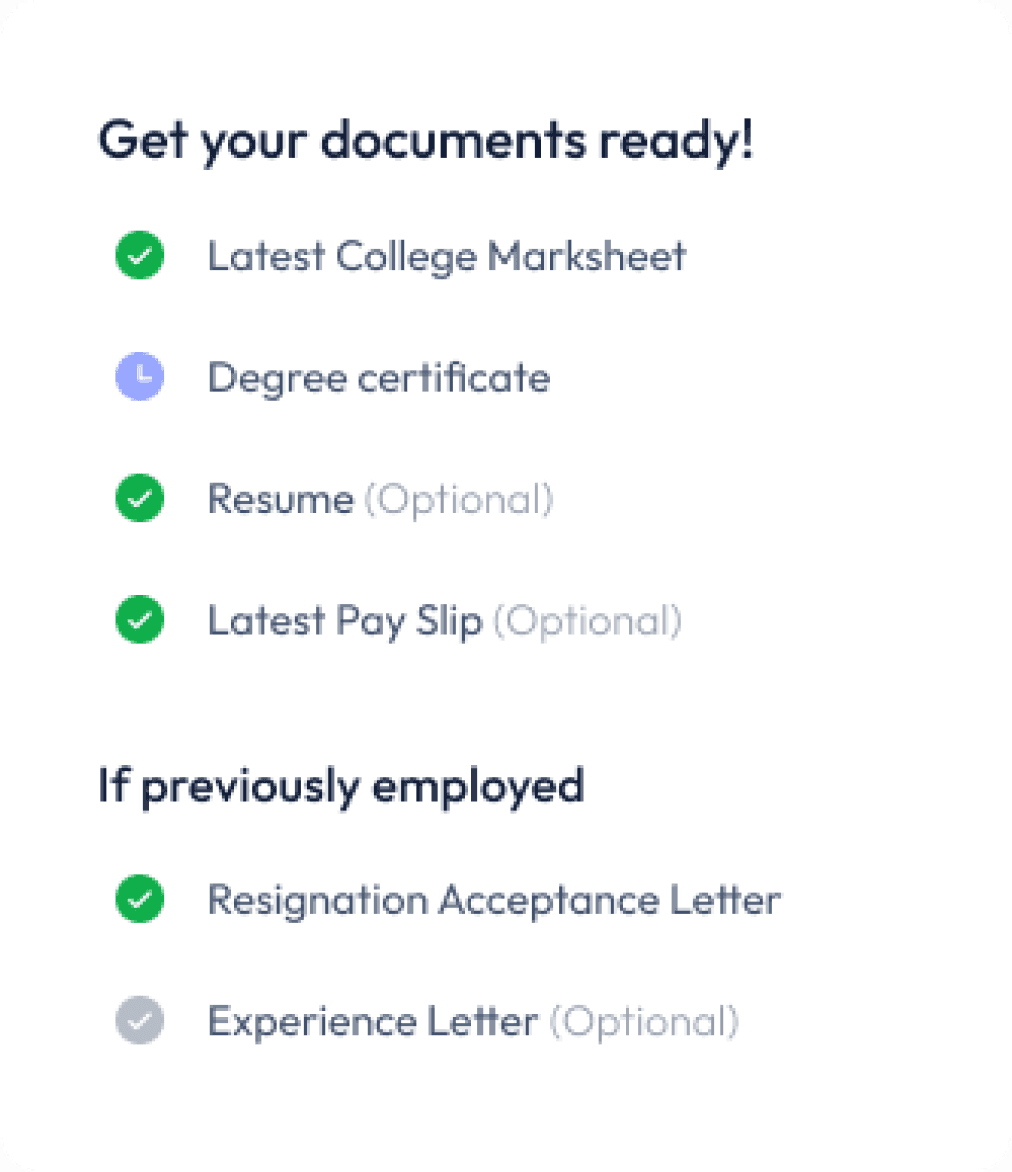

Minimize manual input using resume and payslips import to reduce friction and drop-offs.
Use a checklist-based layout to ease cognitive load and maintain task focus.
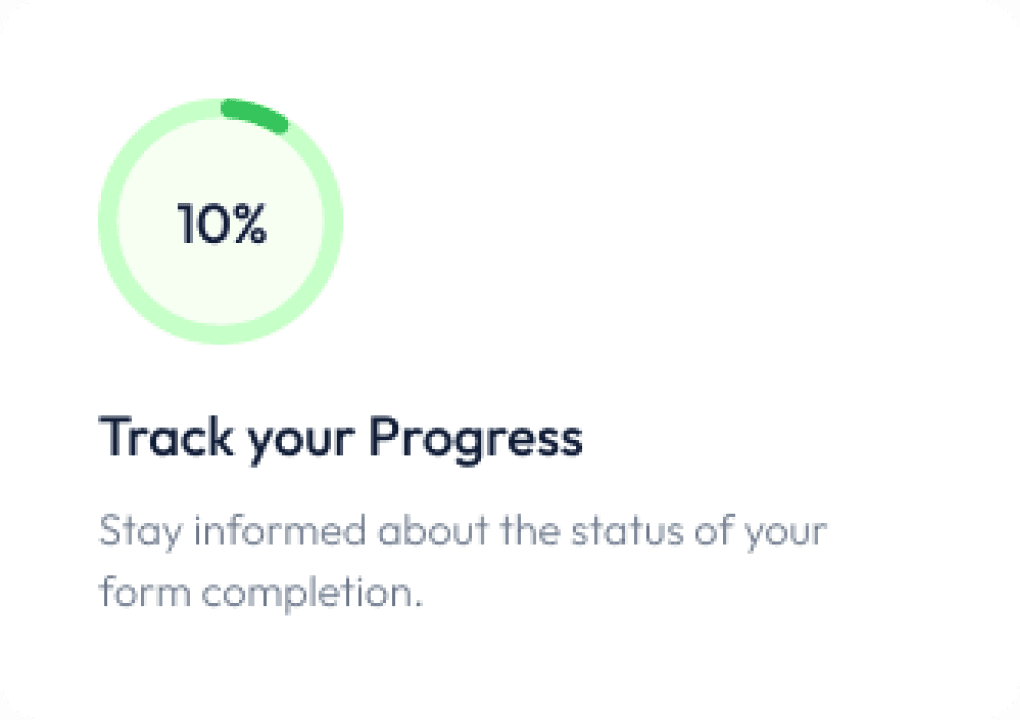
Employ color-coded cues and progress tracking to guide users seamlessly.
Before
After
Impact Of Design
In a webinar with Angel One's HR team, it was highlighted that
Achieved a 9.1 onboarding experience score
Saw an 80% drop in employee queries
Recorded a 17.06% increase in new hires compared to the previous year
Reflection and Key Learnings
Challenges Faced
Platform Limitations: Working within the constraints of a low-code platform restricted design flexibility. We had to prioritize clarity and functionality over advanced interactions.
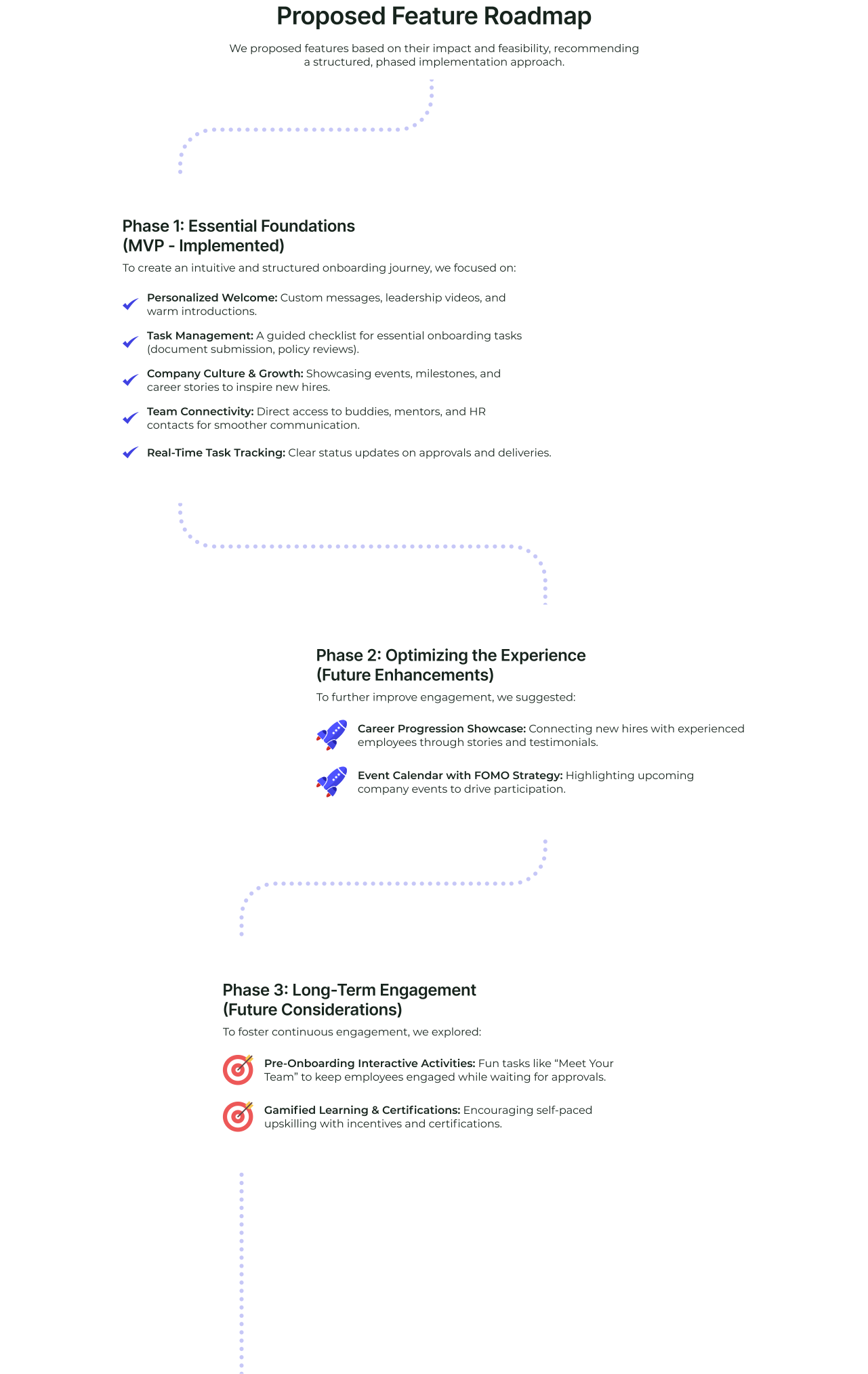
Information Architecture: Organizing onboarding content into simple, easy-to-follow steps that fit with the user journey, despite the complexity.
Balancing Design and Business Needs: Managing the balance between creative design and meeting strict business requirements.
Key Learnings
User-Centric Design: Starting with user journey questions helped prioritize the most important features.
Business Alignment: Early alignment with stakeholders was key to keeping the design process on track and ensuring it met business goals.
Design Process: Technical limits led to simpler, clearer solutions; keeping designs simple improved the user experience, and planning for scalability is important for future growth.
Project Management: Clear feature prioritization (P0, P1, P2) helped maintain focus on user needs while managing scope effectively. Future projects could benefit from proposing alternative user flows and information architecture earlier to encourage more design exploration.
What’s Next?
Motor Insurance
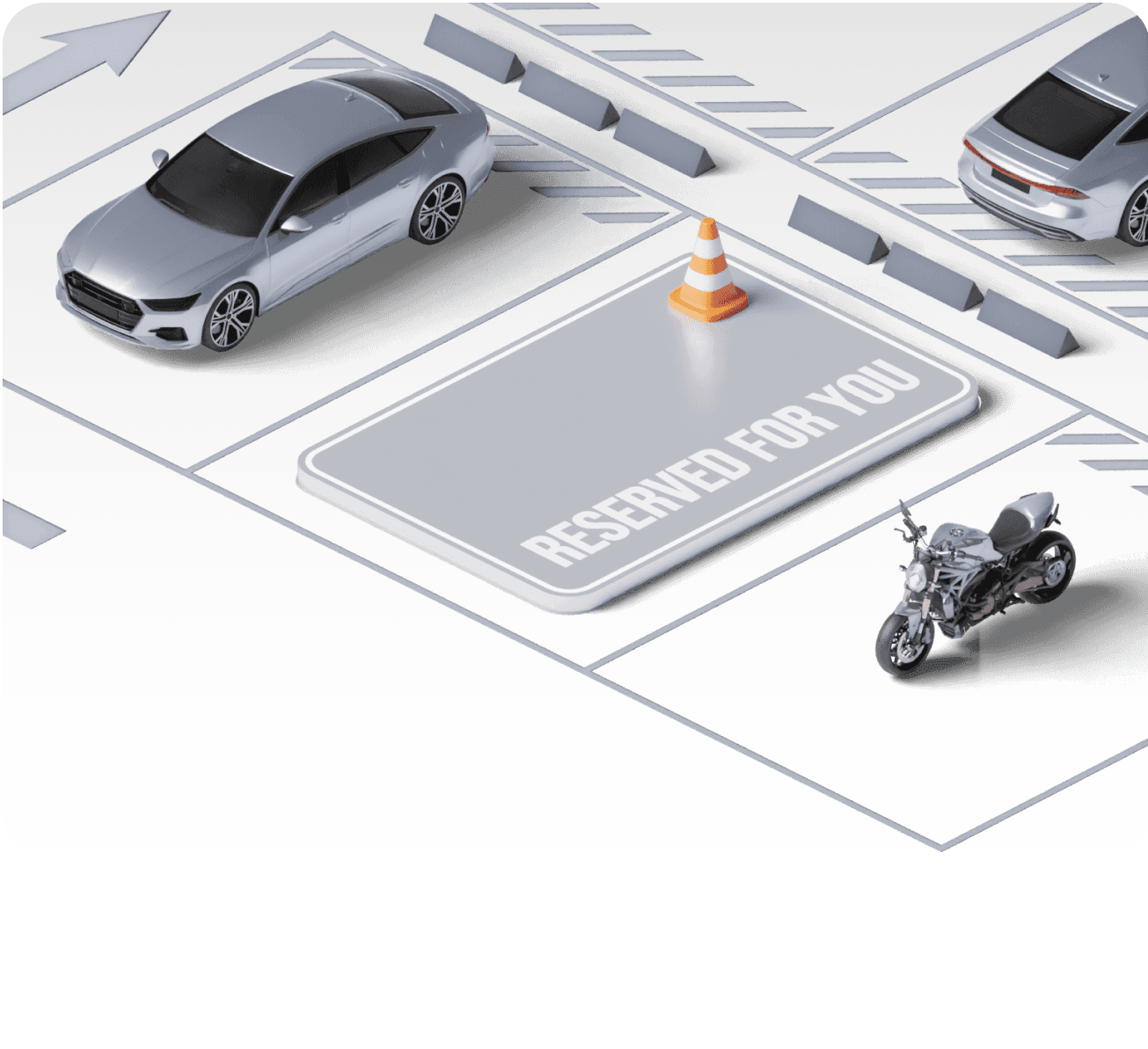
AngelOne's first-ever insurance product caters to 20+ million users, redefining the digital insurance experience.